Stillness and touch, not technique
I don’t use techniques, procedures, or interventions. Instead I offer stillness and a gentle, calm touch. In these conditions your body can finally settle, often for the first time in a long while.
A space where you can meet Stillness, take a breath, and simply be. Without judgment, without rush, at your own pace.
Sign up for a free sessionOur days run between work, home and errands. We plan, catch up, answer one more message, exercise, meditate, go on holiday. We do one thing while already thinking about the next, and when we try to pause, it turns out we hardly know how. Even if we manage, we soon slip back into the old routine. All that rush, readiness and noise, around us and in our heads, slowly drowns out the signals coming from the body. We feel our inner world and our needs less and less, emotions carry us away more easily, and somehow we live a little apart from ourselves.
My interest in bodywork grew from a personal need to find a way out of this state and recover a natural sense of calm. Before I could support others, I had to face my own history held in the body. That inner work continues to this day, and it keeps bringing me back to myself in ways I hadn’t known before. Each step of the way deepens my trust that the body carries not only the traces of difficult experiences but also a deep wisdom of its own and a quiet capacity to restore itself. That is why I see each person as a whole. Body, mind and emotions are one system.
This path led me to biodynamic craniosacral therapy (BCST), where I rely on trust in the body’s natural forces. It rests on a single premise, that health is always present in us. This is the resource we will be working with, supporting its fuller expression. During the session I create a space of deep stillness and attentive presence, in which your body can truly pause and follow its own rhythm, deciding for itself what matters most. I listen to its subtle signals and attentively accompany what is happening. Your body leads, and I help it along the way.
I am in the final phase of certification at the European Centre for Therapy, the first school of biodynamic craniosacral therapy in Poland. The programme spans over a year of intensive study, a minimum of 150 practice sessions, and continuous development through advanced training.
Outside of my practice, I'm part of the Centrum Kenaz Foundation, a Poznań community built around movement and real connection, a small antidote to the pace of modern life. The same thinking shapes my work - coming back to the body, to the moment, to yourself.
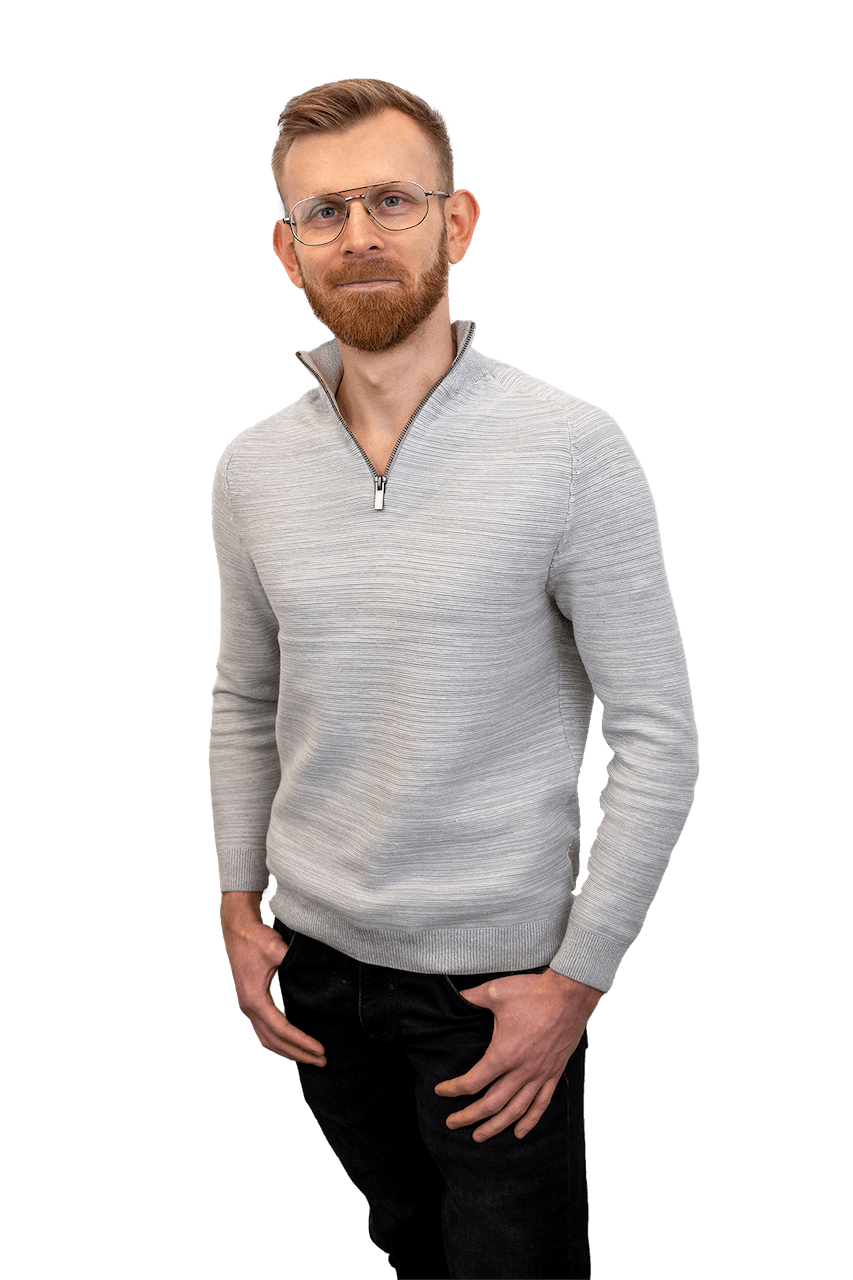
The most precious gift we can offer anyone is our presence.
Craniosacral therapy grows out of osteopathy, which is where it takes its name. The biodynamic approach I work in, however, is something different from manual therapy. I don’t diagnose, I don’t fix, and I don’t impose my own plan on the body. My touch is light and gentle, closer to quiet listening than to any technique.
At the heart of this work lies one conviction. Health is always present in your body, even when it is obscured by pain, tension, or exhaustion. Your body carries its own inner wisdom and already knows the way back to balance. It doesn’t need instructions or corrections, it needs conditions in which it can settle and find its own way to health.
That is why I create the conditions and actively accompany what is happening in you. I am present and attentive, and my touch is gentle, full of respect for your body’s own pace. I don’t impose a direction; your body leads, and I support that process.
Regular sessions most often bring better sleep, calmer breathing, less tension in the body, and a greater capacity to cope with stress.
I don’t use techniques, procedures, or interventions. Instead I offer stillness and a gentle, calm touch. In these conditions your body can finally settle, often for the first time in a long while.
Your body already knows what it needs at any given moment. I don’t have to guess, and I don’t plan anything in advance. All I do is give you space, time, and a presence free of judgment, and the rest unfolds within you, at its own rhythm.
I don’t treat your body as a problem to be solved. I create the conditions in which your body begins to recover its balance, settle, and regenerate, and I accompany that actively. I am present and engaged, supporting the process without ever forcing it.
In everyday life we rarely have the conditions for the nervous system to truly settle. A session creates them. In calm and at your own pace, your body can release tension, cope more easily with stress, and recover a sense of support.
About therapySafety
In biodynamic therapy, safety is not an add-on but the foundation of all the work, which is why my approach is rooted in gentleness and non-invasiveness, and every element of the session is designed so that your body can recognise signals of safety and gradually open.
Before the first session, we talk about what brings you here and about your intention, as much as you’d like to share.
The foundation of the biodynamic approach: health is always present in your body, even when obscured by illness or tension. The body sets the direction of the work. I don’t impose my own plan, I’m present with what arises.
The body will not move into deeper layers until it feels sufficiently stable. First, it renews its own foundations: a sense of safety, grounding, and contact with itself. These internal "anchors" (a feeling of stability, warmth, and support) allow it to undertake deeper work at its own pace, without the risk of overwhelm.
Safety grows from the quality of contact. When I am fully present, calm, and free from judgment, your body recognises this and naturally begins to settle. I don’t enter your space with a plan or expectations. With attention and respect, I follow what your body offers.
The body has its own inner wisdom and its own processing time. I do not speed up, slow down, or decide for your body. Healing processes unfold organically, in stillness and at the moment the body is ready.
Be still and know.
People come for many different reasons. Some carry pain or tension they can’t resolve on their own. Others feel stuck, exhausted, or disconnected from their body. Some simply need a place to stop. In this work I don’t look at complaints in isolation, I meet the whole person. Below you’ll find the most common reasons people come to me. I create the conditions in which your body settles and returns to balance, and these complaints often ease in the process. You don’t need a diagnosis or a specific condition to benefit from a session.
A constant feeling of being "on edge," difficulty letting go of control, and a sense that your system is permanently in alarm mode, even when you’re resting. Neurotic states, nervous tension, or a general sense of unwellness with no clear cause can all signal that the body needs deep settling and support.
Difficulty falling asleep, waking during the night, morning fatigue. When the body is stuck in vigilance mode, deep rest becomes impossible. This also applies to chronic fatigue syndrome, when exhaustion persists despite rest.
States of tension, a vague sense of threat or excessive activation that doesn’t let up even in a safe environment. This may include panic attacks or symptoms of post-traumatic stress (PTSD). In stillness and safe presence, the body can find its way back to feeling safe.
Accidents, surgeries, sudden losses, difficult medical experiences. You don’t need to talk about them. I work with what appears in the body here and now.
Recurring headaches or migraines that persist despite various attempts at relief often stem from deep, hard-to-reach tension. In deep stillness, the body begins to soften this tension on its own.
For those who want to feel themselves more deeply, understand signals from the body, and cultivate greater presence in everyday life.
A constant feeling of being "on edge," difficulty letting go of control, and a sense that your system is permanently in alarm mode, even when you’re resting. Neurotic states, nervous tension, or a general sense of unwellness with no clear cause can all signal that the body needs deep settling and support.
Difficulty falling asleep, waking during the night, morning fatigue. When the body is stuck in vigilance mode, deep rest becomes impossible. This also applies to chronic fatigue syndrome, when exhaustion persists despite rest.
States of tension, a vague sense of threat or excessive activation that doesn’t let up even in a safe environment. This may include panic attacks or symptoms of post-traumatic stress (PTSD). In stillness and safe presence, the body can find its way back to feeling safe.
Burnout, depression, a feeling of emptiness. When everyday rest is no longer enough, the body needs deeper settling to begin rebuilding its strength.
Accidents, surgeries, sudden losses, difficult medical experiences. You don’t need to talk about them. I work with what appears in the body here and now.
A sensation of "living in your head," emotional numbness, or difficulty sensing your own boundaries. The body has been through overload and needs deep stillness to find its way back to itself.
Sciatica, femoral or brachial neuralgia, tingling and numbness in the limbs, tics. Deep tension often lies behind these complaints, holding the body in rigidity. As it begins to release, natural elasticity and freedom of movement return.
Recurring headaches or migraines that persist despite various attempts at relief often stem from deep, hard-to-reach tension. In deep stillness, the body begins to soften this tension on its own.
The temporomandibular joint is one of the areas where stress most often accumulates. As the whole body begins to settle, these areas release on their own, which often brings relief to the neck and shoulders as well.
Irritable bowel syndrome (IBS), bloating, chronic constipation. The digestive system is closely linked to the nervous system. When the nervous system settles, gut function often returns to its natural rhythm.
Tinnitus, dizziness, sinus problems, recurring ear infections. Supporting the whole system and settling the nervous system may bring relief from these complaints.
For mothers whose body needs support after the intense experience of birth. In stillness and calm, the body gradually finds its balance after hormonal changes, and you can reconnect with your body anew.
The aftermath of accidents, falls, or sports injuries. Post-concussion states, recovery after fractures and sprains. After an injury, the body doesn’t always return to full balance on its own and may need gentle support.
Widespread musculoskeletal pain, hypersensitivity to touch, chronic fatigue. When pain has no clear organic cause, it is often an expression of long-term overload of the whole system. In the deep stillness of a session, the body gradually begins to settle, and hypersensitivity and pain may, in time, lose some of their intensity.
Regular sessions help the body remember how to move fluidly between activation and rest before overload sets in. This also supports a weakened immune system and recovery after illness or surgery.
Biodynamic therapy is an excellent complement to psychotherapeutic work. It allows the body to integrate what has been named and understood at the cognitive level.
Breakups, grief, career changes. In periods of major destabilisation, sessions offer a safe anchor where the body can find new ground of its own.
For those who want to feel themselves more deeply, understand signals from the body, and cultivate greater presence in everyday life.
The list above is only a set of reference points. At the heart of this method is always your individual experience and the unique needs of your body. If you feel you need support but don’t see an exact description of your situation here, please get in touch. Biodynamic therapy often brings relief in states that are difficult to define. Sometimes people come in with one concern and the body turns to another first. That is no accident - it has its own order and starts with whatever matters most at that moment.
Learn to read symptoms not only as problems to be overcome but as messages to be heeded.
A session lasts about 50-60 minutes, of which approximately 30-40 minutes is hands-on work, with the rest being conversation before and after. Every session is different. It’s your body that sets the priorities. There is no script, just attentive listening.
Your comfort matters to me, so come in loose, comfortable clothing. Try to avoid a heavy meal right before the session, and if you have longer hair, tie it loosely.
approx. 10 min
Conversation
We begin by talking about how you’re feeling, any complaints, and your expectations. This is a time for questions and building a sense of safety, the foundation of the entire session.
approx. 30-40 min
Hands-on work
The session takes place lying down, fully clothed, without shoes, mostly on your back. Before I place my hands, I always ask for your consent, or let you know if I’m about to change where I’m resting them. In the first sessions I usually rest them on the feet, shoulders, and head, and over time, as your body needs it, on other areas too, such as the sacrum, chest, belly, or throat. My touch is light and gentle, my hands simply resting quietly on the body. I am attentive, present, and engaged. We stay in stillness for most of the session. I encourage you to simply let yourself feel whatever arises, and it’s best to stay with that stillness for as long as it feels good to you. From time to time I may ask what you’re noticing, or invite you to turn your attention to a particular sensation. If anything starts to feel overwhelming, you can say so or ask for a pause at any moment. In this calm presence, your body finds support and decides for itself what matters in the moment. How the body may respond to this work is described in the section below.
approx. 5-10 min
Integration
After the work is done, I give you a moment to slowly "come back". There’s no rush. Then we talk about what you experienced and I answer any questions you may have.
How a session worksReactions
During a session, the body may respond in various ways, sometimes noticeably, sometimes very subtly. Below I describe the most common experiences. If anything worries you, you can always tell me.
You may experience a sudden feeling of warmth or cold, tingling, energy flows, or pulsation. Involuntary muscle tremors may also appear, a sign that the nervous system is releasing accumulated tension. There’s no need to analyse them or do anything with them; simply let them flow through. If anything feels too much, we just pause.
Sometimes deep relaxation is accompanied by emotions or memories. You don’t need to analyse them. If difficult states arise, I am here with you. I will help you move through them safely and integrate them. Your body leads this process and knows how much it can handle.
A frequent experience during a session is deep relaxation, a feeling of heaviness in the body, and drowsiness. Many people drift into a state between waking and sleep, or simply fall asleep.
Sometimes during a session no clear signal appears, no distinct sensations, emotions, or images. This doesn’t mean the therapy isn’t working. The effect of this work can be subtle and hard to perceive in the moment. Many people notice changes only after the session: in better sleep, calmer breathing, less tension in the body.
How a session worksAfter the session
The session doesn’t end the moment you get up from the table. Over the following 2-3 days, the body continues processing what was set in motion. Most people feel calm, relief, and relaxation during this time, but some reactions may arise that can be surprising. Each of them is a natural part of the process and usually passes on its own.
The most common experience is a feeling of deep relaxation, warmth, and lightness in the body. This may be accompanied by noticeable heaviness, a sense of slowing down, or a feeling that the body is asking for rest. Some people experience temporary headaches, muscle aches, tingling, dizziness, or nausea. Changes in body temperature may occur: chills, waves of heat, increased perspiration. Increased need to urinate is also common. These reactions usually pass within one to three days and reflect the body actively processing the changes set in motion during the session.
Many people feel refreshed after a session, lighter, as if they’ve regained access to resources that were blocked. Others experience a slowdown and pronounced tiredness, sometimes deeper than usual. The body is directing energy inward, toward integration. There may be a need for more sleep, earlier rest in the evening, or a short nap during the day. It’s worth treating this as an invitation to rest. This phase usually passes within one to three days.
After a session, many people notice that they can feel their body more clearly: breathing becomes fuller, tension becomes more conscious, and the body’s boundaries feel sharper. This may come with heightened sensitivity to stimuli: sounds, light, or touch. Sometimes a state emerges that can be described as “being in between”: a sense of fog, feeling scattered, difficulty focusing, or a feeling of not having fully returned. This is a natural transitional state as the body reorganises and needs a moment to settle. A calm walk, time away from screens, and earlier rest can help.
Some people sleep more deeply and peacefully than usual after a session and wake more rested. Others may experience dreams that are more vivid than usual: intense, emotionally charged, strikingly realistic. Memories or images that seemed long forgotten may resurface. They may take the form of nightmares or lead to restless nights and waking. This is a natural part of integration, in which the body continues its work during sleep as well. It usually returns to normal after a few nights.
Deep soothing, inner lightness, and calm are the most common emotional experiences after a session. Emotions may be closer to the surface than usual, with tears or sudden mood shifts coming more easily. In some people, emotions that were held in the body for a long time begin to surface: sadness, anger, fear, grief, a feeling of being scattered. They may appear seemingly without reason and don’t have to be linked to a specific memory. This is material that begins to release. There is no need to analyse them, it’s enough to let them move through the body at their own pace.
Existing complaints may ease or noticeably diminish after a session. It also happens that they temporarily intensify, or sensations appear in places where you previously felt nothing. Old symptoms may briefly resurface. This is part of the reorganisation process: as the body dissolves old tension patterns, it may briefly revisit them on the way to a new balance. Such reactions can persist for up to a few days.
A session sets in motion subtle processes that continue over the following hours and days. On the day of a session and the day after, it’s worth slowing down and avoiding intense effort, both physical and mental. Don’t schedule important conversations, decisions, or new commitments for that day. Allow yourself an early rest, a quiet evening, a short nap, an unhurried walk. Drink plenty of water. This is a natural space in which the body finishes its work on its own.
How a session worksContraindications
Biodynamic therapy is one of the gentlest forms of bodywork. It rests on a light, calm touch and attentive presence, not on procedures or techniques. For this reason, the list of contraindications is short. They mainly concern acute states requiring immediate medical intervention, and situations where changes in cerebrospinal fluid pressure could be risky. When in doubt, it’s always best to consult your doctor. Even when the therapy isn’t recommended at a given moment, it can often be a valuable support later, once the condition has stabilised.
Recent stroke, brain haemorrhage, aneurysm rupture, or cerebral oedema. In the acute phase, when intracranial pressure is unstable, therapy is contraindicated. Once the condition has stabilised (usually after 6-8 weeks and with medical clearance), this work can be valuable rehabilitation support.
Fresh skull fractures and active cerebrospinal fluid leaks (e.g., after trauma or lumbar puncture). We wait until the tissues have healed to avoid disrupting the natural process of structural repair.
Brainstem herniation or acute meningitis (e.g., from infection) require immediate hospitalisation. Therapy is only possible after the inflammatory condition has been fully resolved.
Advanced Arnold-Chiari malformation (displacement of brain structures into the spinal canal) or unstabilised hydrocephalus. In such cases, a prior neurological consultation is necessary to confirm the safety of working with bodily fluids.
Active psychosis, manic episode, or severe depression with self-harm tendencies. In this work, in deep stillness, emotions that have been held in the body may at times surface. For this, a stable psychological ground is needed. In such moments, specialist psychiatric care takes priority.
The therapy rests on a subtle, attentive contact with the body. Alcohol, drugs, or strong consciousness-altering medications (taken shortly before a session) make it impossible to establish clear therapeutic contact.
In order to change, people need to become aware of their sensations and the way that their bodies interact with the world around them.
The wound is the place where the Light enters you.
“A biodynamic session is an extraordinary experience! I can’t put it into a few words, you simply have to feel it for yourself. Maciej is a professional who provides comfort and a sense of safety.”
“It was my second session, and it was extraordinary. I feel it was a very important one. Maciej has a remarkable gift and sensitivity. I’m struck by how much can be transformed and released from the body with such gentleness. Thank you.”
“Maciej creates a very supportive, safe space. He radiates calm, which makes it easier to meet the calm and stillness within yourself. I left the session relaxed, at peace, and it was exactly what I needed:) Thank you:)”
“I wholeheartedly recommend craniosacral therapy and the calm and patience Maciej radiates. The therapy was deeply freeing during a stressful time. It was moving, but it also brought real comfort and permission to mindfully let go. I felt cared for. A professional approach. I will definitely be back.”
“I didn’t have high expectations for the session, more curiosity and openness. I’m a deeply emotional person, and it was in the emotional body that I felt the greatest difference. Above all, feelings long unseen: joy, calm, and a sense of safety during the session. I came in the middle of a difficult time, full of tears and tension. Already during the session my body felt safe and stable enough that it no longer needed to cry. Maciej’s SOOTHING PRESENCE, his professionalism and gentleness helped me settle into my body, and I left wonderfully quiet and calm. And then, in waves, an unforced, pure, heart-opening GRATITUDE began to flow through me. Thank you, and I recommend a session with Maciej with all my heart.”
“Highly recommended! After the session I felt noticeably calmer, more relaxed and less tense. It was a really valuable experience.”
“I highly recommend sessions with Maciek. He creates a safe space for processes of regulation and healing, and clearly explains what the session will involve. There’s also room to share your impressions afterwards. You can see his deep knowledge and full focus. Recommended.”
“Top-quality service - complete professionalism. Maciej holds the space with remarkable steadiness and brings deep attentiveness to the process of the person receiving the session. It is non-invasive and safe (thanks to the great knowledge and responsibility of the “masseur”), and at the same time it has a very strong, deep effect. I came out transformed, with different thoughts, and it really sets you on a different track - you can change your life step by step. I didn’t expect such a competent person, I felt like I was with a long-time specialist! I warmly recommend to everyone.”
“Maciej really helped me relax, and I was amazed at how much my nervous system calmed down. Recommended.”
“Today’s visit was a very good and calm experience for me. Your work radiates great attentiveness, gentleness, and genuine care for another person. You create an atmosphere of safety and trust, thanks to which the body can truly relax and feel looked after. During the therapy one can sense calm, sensitivity, and authentic engagement. This approach made me feel heard and accepted exactly as I am. I think many people can find a moment of stillness, relief, and space for themselves here.”
“Maciek has magic hands that effectively mobilise the body to release emotional stagnation. The session took place in a safe and warm atmosphere - I felt cared for at every stage. I didn’t expect that in 30 minutes you could achieve such significant results working with emotions through the body. I felt free flow throughout my whole body, a release of blockages, and on top of that an expanded range of awareness. Highly recommend.”
“This was my first visit of this kind, and yet I had the opportunity to feel comfortable and relaxed enough to let my body fully unwind. You can sense real professionalism - not the quantity but the quality of movements, very subtle and intuitive. The whole thing is preceded and followed by a conversation, which makes the therapy personalised to the patient. Highly recommend.”
Each patient carries his own doctor inside him.
Free sessionsSession options
approx. 50-60 min
While I’m completing certification.
60 min
Come and see if it’s for you.
60 min
We go deeper.
60 min
Every session is different.
Finding a moment to sit and just do nothing can be very healing, transforming, and nourishing.
Who looks outside, dreams; who looks inside, awakes.
Wołkowyska, near Lake Malta, Poznań
Email — loading
Phone — loading
Given the nature of my work and my care for digital hygiene, I prefer text-based contact (SMS or email). If I don’t pick up, please leave an SMS or send an email. I’ll get back to you as soon as I can. Sessions are available in Polish and English.